
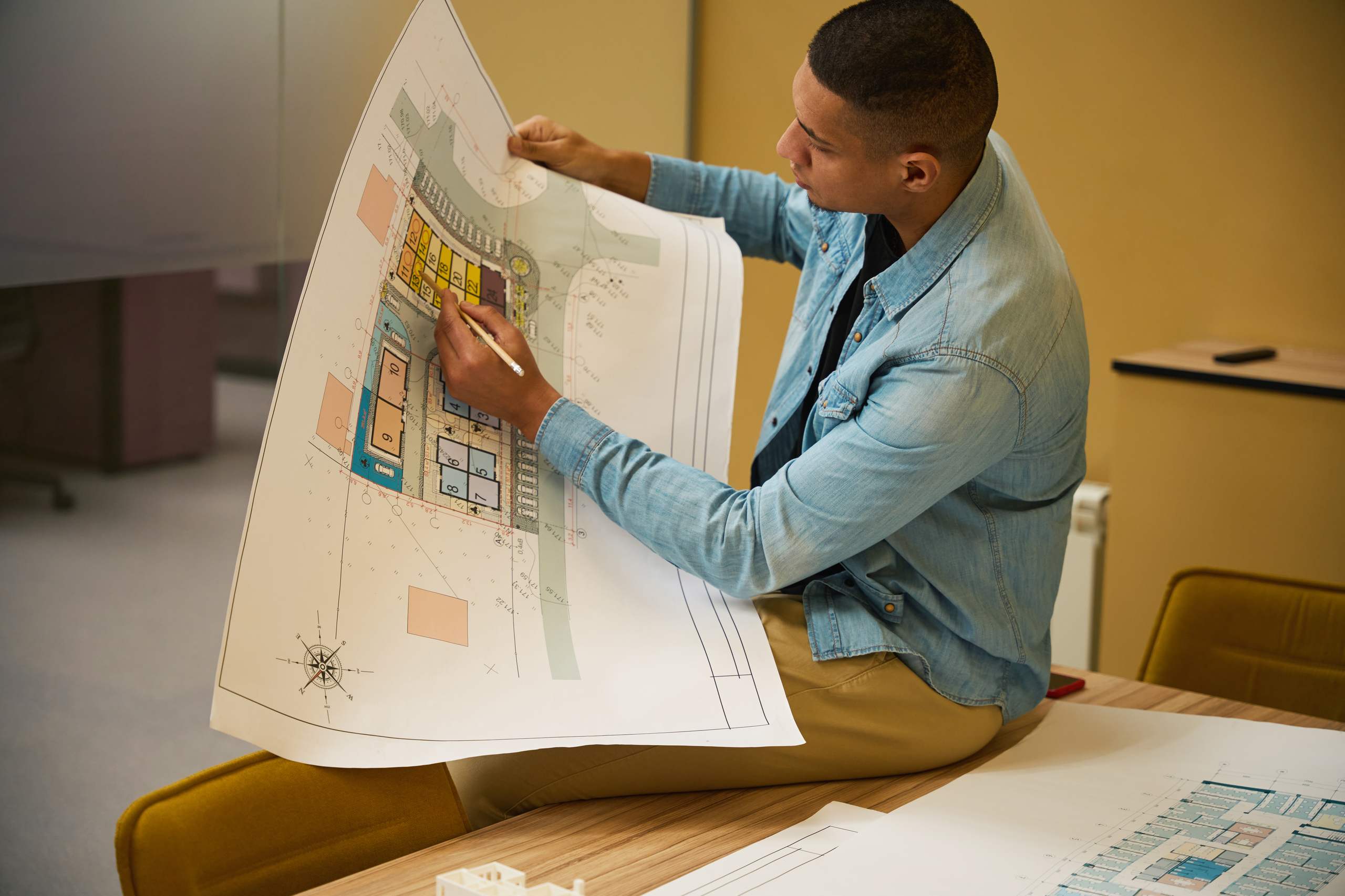
The building that surrounds you now, it was an idea first. Architectural design is how you convert an idea into physical space for people to inhabit and move about in. Architectural design is a blend of creative problem-solving and engineering that involves all kinds of choices and every choice counts, no matter how insignificant.
Start with concept. The beginning is pure creativity. Here, the architect investigates what the structure would do for whom and with what context in mind. Ideas start getting organized and sketched out. It’s a period of wide-ranging creativity, where there are no limits to the number of concepts that can be explored.
Moving forward with development. Here, the imagination and reality merge. The project now gets developed with a more concrete plan of layouts, measurements, materials, connections between spaces, etc. At this point, everything becomes precise since it has to be both visually beautiful and also technically feasible. It should always be kept in mind that it is useless to design something so that it looks nice on paper, but you will never see it constructed. So it needs to be perfectly balanced.
Computer programs have become an essential part of architectural practice today. With the help of 3D modeling, rendering and simulation software, architects can test their ideas in a virtual environment and identify problems, improve the flow of space, and make realistic presentations for clients or teams. The work that might have taken many days using hand tools can now be completed in a few hours, with a few simple clicks.
However, architecture is not just about the built environment or software. At its heart, it’s about the user. The design of a space impacts how a person will experience that space. Light, proportion, materials, texture, even sound can all create a feeling within a person. Architectural excellence, in a good piece of architecture, becomes unnoticeable, as it simply works, creating an easy experience of movement in the space and avoiding any unnecessary stress to the user.
During the design phase, constant review and iteration occurs. Every small change, adjustment, alternative, etc., is made as the design takes shape. Technical limitations, user feedback, and new information will always shape this iterative design process, refining the initial idea into a complete architectural design ready for realization.
In the rapidly evolving world of architecture, sustainability, smart technologies, and human-centred design have become the cornerstones of every modern architectural project. Future architects have not just to know how to make architecture, but they have to consider what impact the architecture is making in their cities, nature, and communities.
We teach this process with a practical focus. It is our aim to provide our students with a sense of how architects think and how they go about taking ideas through the design process from first conceptualization to detailed, fully-developed architectural design.